
Dust generally forms where mechanical stresses within the product are too high. Intense shear forces, friction between particles and aggressive mixing tools cause delicate structures to break down, particles to fragment and fine components to be released. This process is not merely a physical phenomenon, but has far-reaching consequences. Product losses, altered particle size distributions and increasing inhomogeneity are often the result. At the same time, the strain on plant components increases, leading to greater wear and higher maintenance costs. Dust-laden processes also pose health risks to operating personnel, whilst in certain industries, explosion hazards must also be taken into account.

Powder explosion in blue
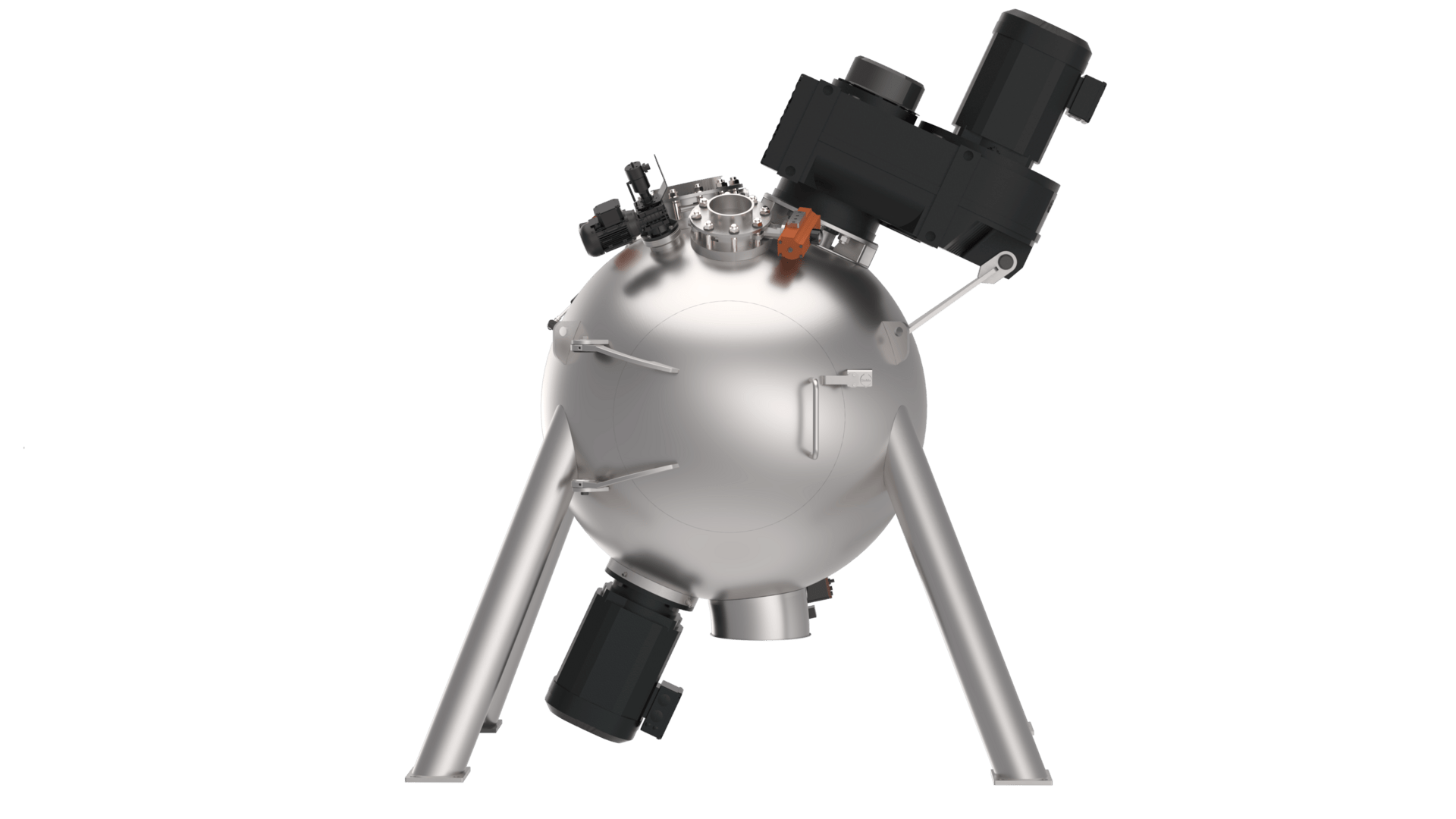
Against this backdrop, the targeted reduction of dust generation is becoming increasingly important. Dust-free, or at least low-dust, mixing is not merely a cosmetic goal, but a key factor in improving the entire process chain. If the mechanical stress on the mix can be minimised, the original structure of the raw materials is preserved. This leads to more stable and reproducible results, which are crucial particularly in sensitive applications such as the food, pharmaceutical or chemical industries. At the same time, raw material losses are reduced, cleaning efforts are minimised and energy efficiency is improved, as less energy needs to be expended on unnecessary friction processes.
A key starting point for this development lies in a fundamental rethinking of the mixing principle. Instead of forced, often aggressive mixing, the focus is now on the targeted control of product movement. The material being mixed is no longer regarded as a passive element that needs to be homogenised by tools, but as an active component of the process. Through optimised motion sequences, uniform mixing can be achieved without the need for high shear forces. This form of process control is based more on physical and fluid dynamics principles and less on the mere application of mechanical energy.
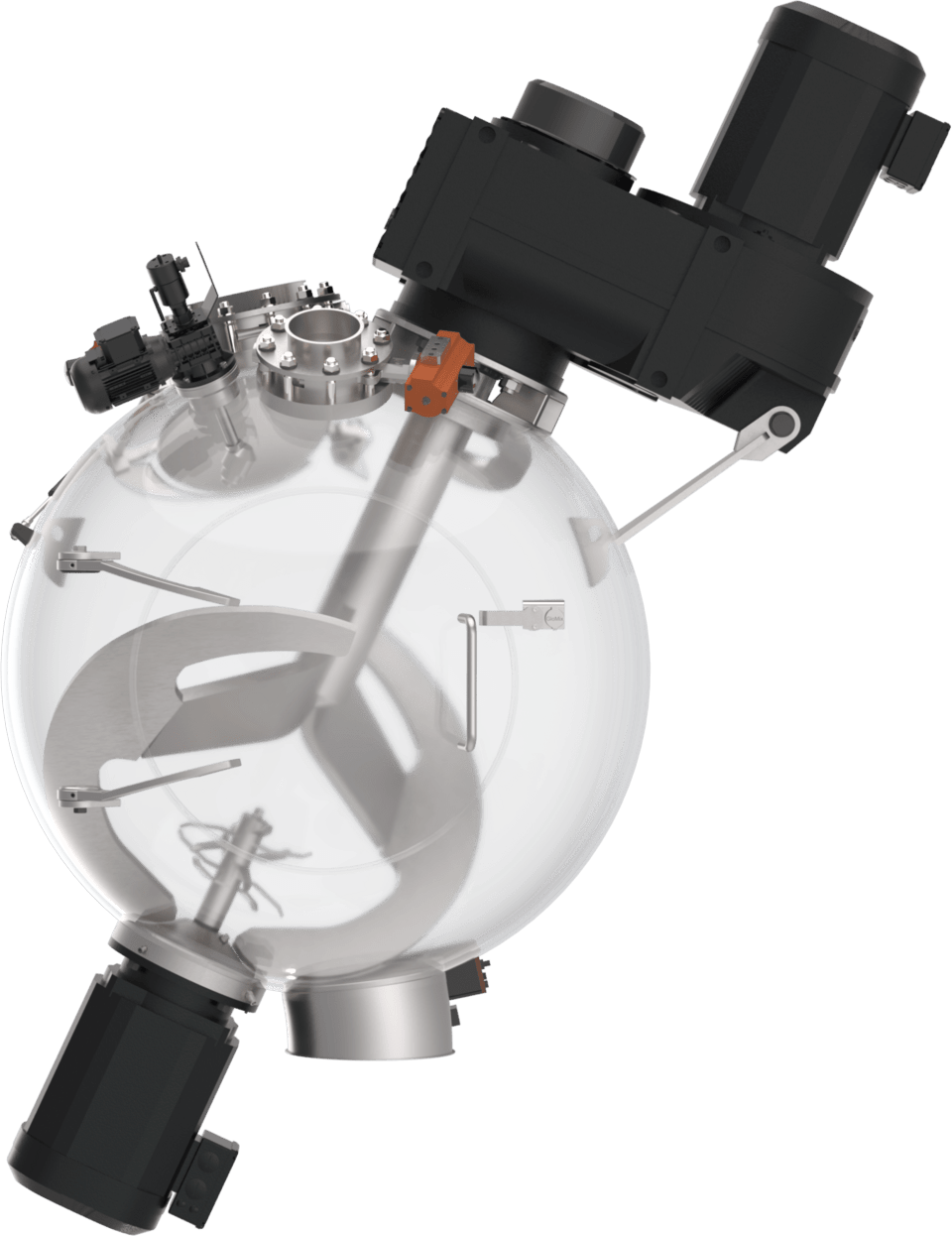
The design of the mixing axis plays a key role in this context. Whilst conventional systems often rely on cylindrical or conical geometries, a spherical, inclined mixing axis opens up new possibilities. Its unique shape generates uniform circular movements within the product, enabling continuous mixing. The material follows a natural dynamic characterised by gentle rearrangements and flowing movements. Friction and localised stress peaks are significantly reduced, thereby considerably minimising the generation of dust.
This geometric optimisation is complemented by specially designed mixing tools, which are no longer primarily designed for intensive mixing action but instead support the movement of the product. They intervene only where necessary and avoid unnecessary shear forces. The interplay between chamber geometry and tool design results in a mixing process characterised by high homogeneity whilst ensuring maximum product protection. Homogeneity levels of over 99 per cent are not the exception, but rather a reflection of improved process control.
The implications of such an approach extend far beyond mere product quality. In an increasingly digitalised production environment, such as that envisaged in the context of Industry 4.0, stable and reproducible processes are a fundamental prerequisite for successful automation and process monitoring. Low-dust processes help to make sensor technology more reliable, extend maintenance intervals and reduce unplanned downtime. At the same time, they make an important contribution to sustainability, as emissions are reduced and resources are used more efficiently.
In summary, it can be said that dust-free mixing is far more than just a technical refinement. It represents a fundamental paradigm shift in mixing technology. The focus is shifting from the mere application of force to intelligent, physically optimised process control. Systems that rely on minimal friction and natural principles of motion impressively demonstrate that efficiency, quality and sustainability are not mutually exclusive, but can, on the contrary, reinforce one another.
This makes it clear that the issue of dust control in the mixing process is not merely an operational one, but also a strategic one. Companies that specifically address this aspect lay the foundations for stable, efficient and sustainable production processes.