Metallpulver

Powder metallurgy

Powder metallurgy and metal powder processing – mixing technology for high-performance metal powders

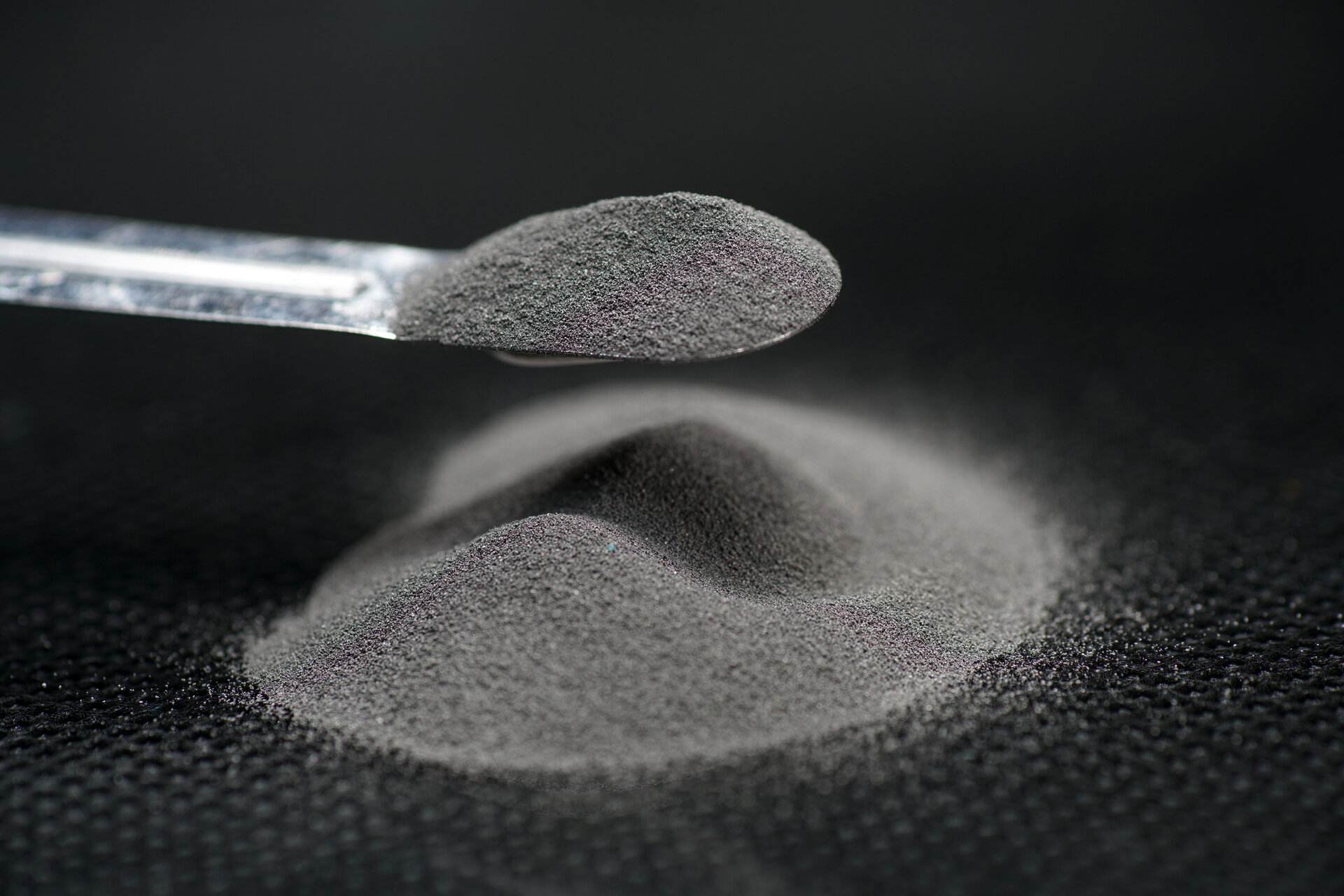
Powder metallurgy is a key technology for the production of high-quality metallic materials and components. Whether it is traditional pressing and sintering techniques, modern additive manufacturing, metallic 3D printing or the production of special alloys: the quality of the metal powder used has a significant impact on the stability and reproducibility of the subsequent production processes.

The processing of metal powders plays a key role in this. Metal powders must be mixed, homogenised, blended with additives where necessary, wetted or dried, and then reliably fed into the next stage of the process.

The requirements for an industrial mixer for metal powders therefore go far beyond simply blending different powders. A modern mixing technique for powder metallurgy must combine a high degree of homogeneity with gentle handling of the product, reproducible powder properties and controlled process management.

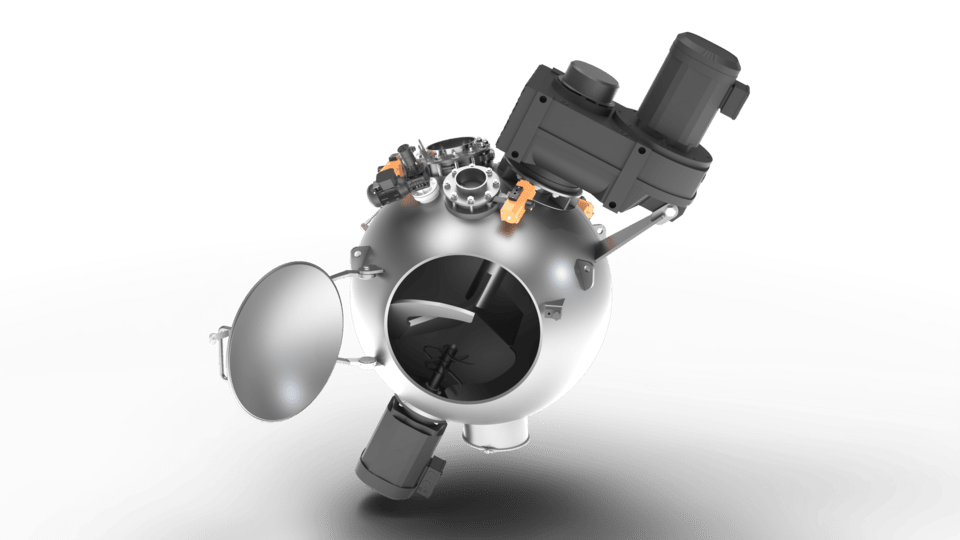
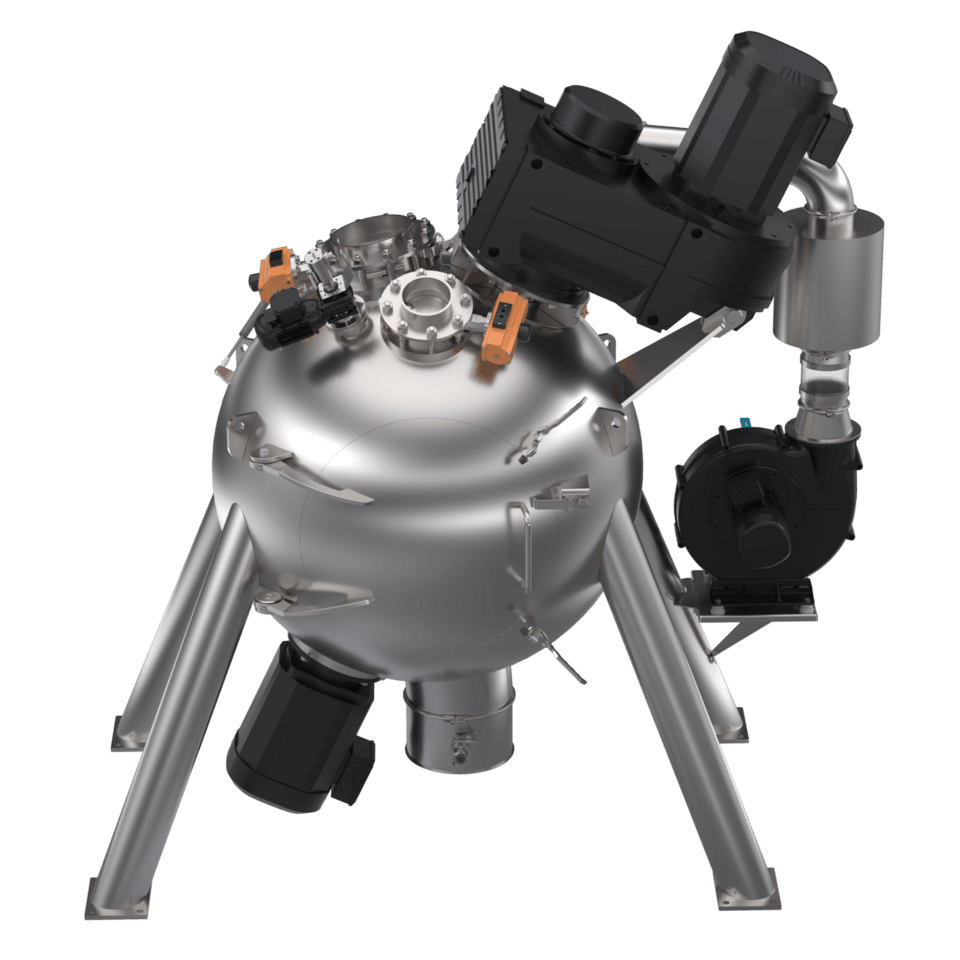
For GloMix, it is precisely this interplay that forms the basis of process development. The Glaxiaris® is a solution designed specifically for demanding industrial powder processes.
What is powder metallurgy?

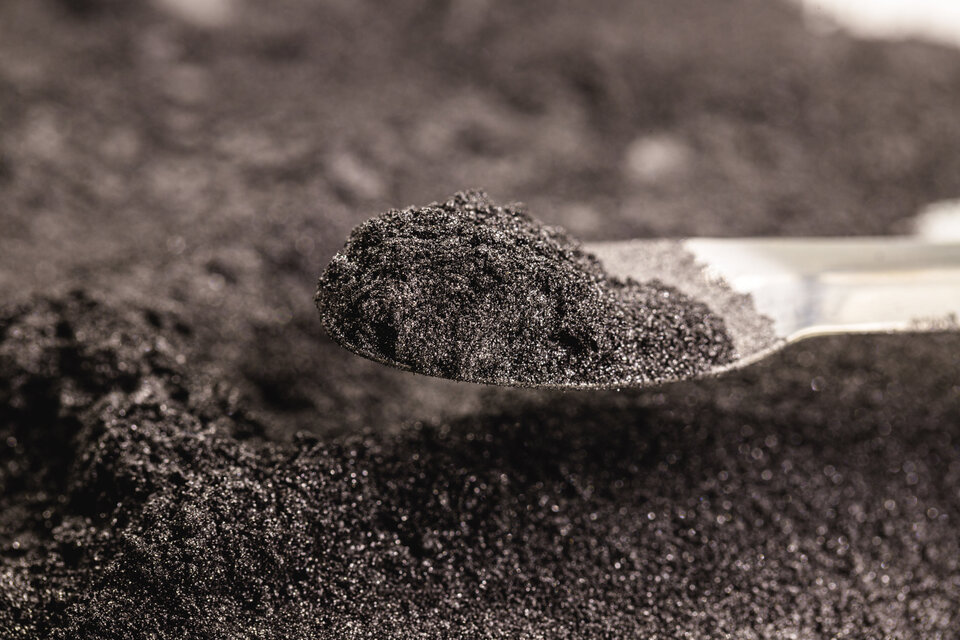
The term ‘powder metallurgy’ refers to a range of processes in which metallic materials are processed in powder form. These processes begin with metal powders, mixtures of metal powders or specially formulated powder blends.

Depending on the application, these powders are then, for example, compacted and sintered, or used in additive manufacturing processes.

Typical metal powders are based on, amongst other things:

  • iron and iron alloys
  • stainless steel
  • titanium and titanium alloys
  • nickel and nickel alloys
  • other metallic alloy systems

In addition, alloying elements, additives, flow aids or compaction aids may form part of a metal powder mixture.

The production of homogeneous metal powder mixtures is therefore a key process step in powder metallurgy. This is because only when the individual components are distributed sufficiently evenly can subsequent processes be carried out under reproducible conditions.

Mixing metal powders: a challenging process engineering task

Anyone wishing to blend metal powders must take numerous material properties into account. Metal powders differ not only in terms of their chemical composition; particle size, particle shape, bulk density, surface finish and flowability can also vary considerably.

An industrial powder mixer for metal powders must take these varying properties into account.

Its primary task is to produce as homogeneous a powder mixture as possible from several starting components. At the same time, the original characteristics of the powders should be preserved in as controlled a manner as possible.

This gives rise to several requirements at once:

  • Homogenise metal powders without causing unnecessary stress to the particles.
  • Mix additives into metal powder without causing localised over- or under-concentrations.
  • Process particles of different sizes and bulk densities without promoting undesirable segregation of the metal powder.
  • To achieve the desired mixing quality without unnecessarily altering the flowability, bulk density or particle structure.

These requirements make mixing technology for metal powders an important part of the entire powder metallurgy process chain.

Homogenising metal powder

Homogenising metal powder

The homogenisation of metal powders is one of the most important tasks in powder processing.

A homogeneous metal powder is characterised by the various components being distributed as evenly as possible within a batch. This applies to different metal powders as well as alloying elements, additives and processing aids.

The mixing process faces particularly high demands, especially when additive concentrations are low. A small quantity of an additive must be reliably distributed throughout a considerably larger quantity of the base powder. The mixing technology must therefore generate sufficient product movement. At the same time, the mechanical stress must not become unnecessarily high.

The homogenisation of metal powders is therefore not about achieving maximum mixing intensity, but about tailoring the process control to the specific powder.

The aim: Achieve a high quality of mixing whilst ensuring that the metal powder is subjected to controlled stress.

Particle size and particle size distribution

The particle size of metal powder is a key factor influencing numerous processing properties.

Among other things, it influences:

  • flowability
  • bulk density
  • packing behaviour
  • compaction behaviour
  • mixing behaviour
  • tendency to segregate

Metal powder mixtures containing particles of different sizes are particularly challenging.

Fine powder components may behave differently to coarser particles. At the same time, fine particles have a larger specific surface area and may therefore exhibit different adhesion and flow behaviour.

A suitable mixer for metal powders must therefore take into account not only the chemical composition of a formulation, but also the physical properties of the particles involved.

Bulk density of metal powders

The bulk density of metal powder describes the ratio between the mass of the powder and the volume occupied by the powder when loose.

It is relevant to numerous industrial processes. If the particle structure changes during powder processing, the packing behaviour and bulk density may also change.

This may be relevant, for example, in dosing processes. In volumetric dosing, a change in bulk density can result in different masses of powder being processed despite the dosing volume remaining the same.

A controlled metal powder preparation process therefore does not aim solely to achieve a high degree of homogeneity. Reproducible powder characteristics are also important.

Flowability of metal powder

The flowability of metal powders is another key product property.

Metal powders must be able to be transported, discharged, metered and distributed within an industrial production plant. Inadequate or variable flow properties can compromise the stability of subsequent processes.

Flowability depends, amongst other things, on the following properties: particle size, particle shape, surface structure, fines content and moisture content.

Previous mechanical treatment of the powder can also influence its flow behaviour.

Anyone who mixes metal powders on an industrial scale should therefore not focus solely on the quality of the mix. Equally important is the question of what properties the powder possesses after the mixing process.

A high-performance powder mixer for metal powders must therefore combine the desired homogeneity with controlled product stress.

Preventing segregation of metal powder

One of the key challenges in mixing metal powders is segregation.

Even a powder mixture that appears homogeneous at first can segregate again due to differences in particle size, density or flow properties.

Segregation of metal powder can occur both during mixing and afterwards.

Critical process steps include, for example:

  • discharge from the powder mixer
  • filling of containers
  • conveying
  • temporary storage
  • dosing and feeding into a production plant

For this reason, the entire process chain must be taken into account.

The aim is not merely to produce a homogeneous metal powder in the mixer. The homogeneous state should, as far as possible, be maintained right up to the actual further processing stage.

Gentle mixing of metal powders

Gentle mixing of metal powders

Gentle mixing is particularly important for powders where the particle structure is relevant to the subsequent process.

During the mixing process, mechanical forces may act on the particles. Depending on the powder and the way the process is carried out, this can result in abrasion, particle breakage or changes to the surface.

This, in turn, allows:

  • particle size distribution
  • fine fraction
  • flowability
  • bulk density
  • dosing behaviour

A suitable mixing plant for metal powders should therefore not be assessed solely on the basis of mixing speed or mixing time.

The crucial question is rather: What is the quality of the powder after the mixing process?

This approach combines mixing quality with gentle handling of the product.

Abrasive metal powders and wear

Many metal powders are abrasive.

During processing, metal powders can cause mechanical wear to mixing tools and equipment surfaces that come into contact with the product.

Wear caused by mixing metal powders is significant from both an economic and a quality perspective.

Increased wear can shorten maintenance intervals and reduce the service life of individual components. At the same time, it must be borne in mind that material abrasion from plant components in contact with the product may potentially find its way into the powder.

In the case of a mixing plant for abrasive powders, the choice of materials, design, process speed and, where necessary, wear protection measures must therefore be considered together.

Particularly when dealing with high-quality metal powders and complex alloys, controlling abrasion and wear is a key aspect of process design.

Metal powders for pressing and sintering

The pressing and sintering of metal powder are among the traditional processes used in powder metallurgy.

First, the prepared metal powder is placed into a mould and compacted. The resulting compact is then heat-treated.

During the sintering process, bonds form between the individual powder particles and the desired material properties develop. Even the preliminary preparation of the metal powder influences this process.

A homogeneous distribution of alloying elements and additives helps to ensure consistent conditions during compaction and sintering. The flowability of the powder is also important, as uniform filling of the mould is required.

The powder metallurgy process chain can therefore be summarised as follows: metal powder → mixing the powder → homogenising the powder → dosing → pressing → sintering → component

Each stage of the process builds on the characteristics established in the previous stages.

Metal powders for additive manufacturing and metal 3D printing

One particularly dynamic application is additive manufacturing using metal powder.

In various metal 3D printing processes, components are produced layer by layer from metal powder. This places high demands on the properties of the powder used. In particular, the reproducible metering and uniform distribution of the metal powder are crucial for stable processes.

When processing metal powders for additive manufacturing, the following properties in particular must therefore be taken into account:

  • particle size distribution
  • particle shape
  • flowability
  • bulk density
  • homogeneity
  • mechanical stress during processing

The mixing process for metal 3D printing powders must be designed to achieve the desired mixing state whilst taking the relevant powder characteristics into account.

Metal powders for additive manufacturing

The English term ‘Additive Manufacturing’ (AM) is used internationally to refer to additive manufacturing processes.

Accordingly, search terms such as ‘metal powder mixing’, ‘metal powder processing’, ‘powder mixing for additive manufacturing’ and ‘metal powder mixer’ are also used in an international context.

The same fundamental requirements apply to process development: a metal powder for additive manufacturing must have defined and reproducible properties.

The upstream powder preparation thus influences the conditions under which the subsequent AM process is carried out. Controlled homogenisation and the preservation of the powder properties required for the subsequent process are particularly important.

Mixing additives into metal powder

In addition to the base powder, powder metallurgy formulations may contain various additives.

The incorporation of additives into metal powders places particular demands on mixing technology. The lower the proportion of an additive, the more challenging it can be to ensure its uniform distribution within a large powder batch. To ensure reproducible product quality, local variations in concentration must be kept to a minimum.

The dosing of additives, their introduction into the powder mixer and the subsequent homogenisation therefore form a single, integrated process.

The aim is to produce a defined and reproducible metal powder mixture.

Wetting and coating metal powders

As well as dry mixing of metal powders, liquids can also be incorporated into the processing stage. When wetting metal powder or coating powder particles, the liquid must be distributed as evenly as possible throughout the powder batch. Care should be taken to avoid localised over-application.

Uneven distribution of liquid can lead to agglomerates or areas of varying moisture content within the batch.

The powder mixer therefore performs several functions in this process: it agitates the product, distributes the liquid and promotes contact between the different phases.

A traditional solid-mixing process is thus transformed into a combined powder processing method involving the addition of liquid.

Complete emptying of metal powders

Complete emptying of metal powders

Metal powders can be high-quality raw materials. Emptying the powder mixer as completely as possible is therefore important from both an economic and a quality perspective.

If powder remains inside the machine after discharge, this results, first and foremost, in a loss of material. Furthermore, in the event of a subsequent change of product or formulation, residues may find their way into the next batch.

Thorough emptying of residual contents is therefore particularly important in the following cases:

  • high-quality metal powders
  • various alloys
  • frequent changes to formulations
  • small batches
  • high purity requirements

This, too, demonstrates that the quality of an industrial metal powder mixer should not be assessed solely on the basis of its mixing capacity.

Cleaning of powder mixers

Cleaning a powder mixer is particularly important when switching between different metal powders and alloy systems. It must be possible to remove residues from previous batches in a controlled manner. Areas that are difficult to access or product deposits increase the cleaning effort and prolong plant downtime.

Consequently, the cleanability of mixing plants for metal powders also has a direct economic impact. Quick product changeovers and good accessibility can help to increase available production time.

When selecting an industrial mixer for powders, it is therefore important to consider mixing quality, residual discharge, cleaning and maintenance as a whole.

Process reliability in metal powder processing

Industrial metal powder processing must be capable of producing consistent results.

This means that, once a particular powder quality has been achieved, it must be possible to reproduce it in subsequent batches under defined conditions. Reproducibility does not, however, relate solely to the chemical composition.

The following are also relevant:

  • homogeneity
  • particle characteristics
  • bulk density
  • flowability
  • mixing time
  • dosabilit
  • discharge behaviour

The key performance indicator is therefore a defined powder condition.

A good mixing process does not merely produce a mixture; it produces a powder with defined properties for the subsequent production process.

Correctly sizing an industrial mixer for metal powders

The selection of a suitable industrial mixer for metal powders should be based on the specific product and the particular process task.

Key questions include:

  • How varied are particle sizes and bulk densities?
  • What level of mixing quality is required?
  • How sensitive are the particles to mechanical stress?
  • Is the powder abrasive?
  • Do small quantities of additives need to be distributed?
  • Is it necessary to add a liquid? Does the powder need to be dried afterwards?
  • What are the requirements for residual emptying and cleaning?
  • How often do the product and formulation change?

Together, these parameters determine the requirements for the metal powder mixing plant.

A purely volume-based approach is therefore not sufficient for complex powder metallurgy processes.

GloMix offen

GloMix – Mixing technology and powder processing

GloMix views industrial powder processing as an interplay between product, process and machinery. This holistic approach is particularly crucial when it comes to metal powders.

The aim is not simply to mix different raw materials together. Rather, a specific powder consistency must be achieved for the subsequent production stage.

For applications in powder metallurgy, the focus is therefore on issues such as homogeneity, particle stress, flowability, bulk density, discharge and reproducible process control. The specific mixing technique used for metal powders must be tailored to the particular product and its processing characteristics.

Glaxiaris® – Powder mixers for demanding powder processes

The Glaxiaris® from GloMix is designed for demanding industrial powder processes.
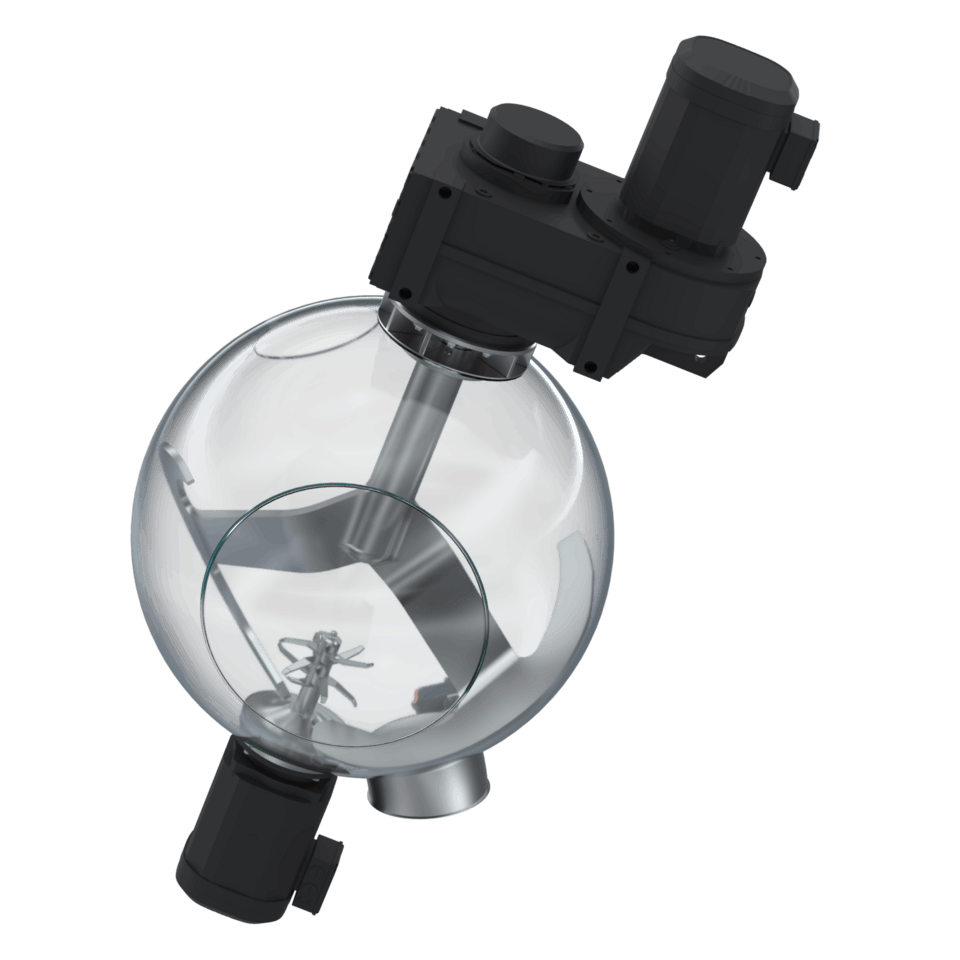
In the field of powder metallurgy and metal powder processing, particular attention can be paid to applications in which different powder components need to be homogenised in a reproducible manner.

The relevant tasks include:

  • mixing metal powders
  • homogenising metal powders
  • mixing alloy components
  • incorporating additives into metal powders
  • preparing powders for pressing and sintering processes
  • preparing metal powders for additive manufacturing
  • producing reproducible powder mixtures

The focus is not just on the mixing process itself. What matters most is the condition of the powder once the process is complete.

Glaxiaris® and metal powders for additive manufacturing

In particular, the processing of metal powders for additive manufacturing places high demands on process control.

Metal powders for industrial 3D printing require specific properties in terms of particle structure, flowability, bulk density and homogeneity. During processing, it is therefore necessary to strike a balance between mixing intensity and product protection.

For GloMix and the Glaxiaris®, this approach is of central importance: it is not maximum agitation, but rather the process control appropriate to the powder in question that determines the outcome.

The Glaxiaris® thus forms part of the process chain between the raw material and the subsequent manufacturing process.

From metal powder to a reproducible process

A high-performance mixing plant for powder metallurgy must be considered from the perspective of the overall process.

The actual mixing process is just one stage in a longer process chain: raw material → dosing → mixing of metal powders → homogenisation → discharge → further processing → component

The quality of each individual stage in the process influences the next.

That is why GloMix does not focus solely on the question: ‘How homogeneously can we mix metal powders?

The key question is: `What condition must the powder be in for the next stage of production, and how can this be achieved in a reproducible manner?`

It is precisely at this interface between powder technology, mixing technology and process development that Glaxiaris® is positioned.

Conclusion: Processing metal powder efficiently and consistently

Powder metallurgy places high demands on the quality and reproducibility of metal powders.

Whether it is metal powder for sintering, metal powder for additive manufacturing, metal powder for 3D printing or complex alloy mixtures: the upstream powder preparation has a significant influence on the conditions for further processing.

The most important requirements include: mixing metal powders homogeneously, preventing segregation, handling particles gently, maintaining flowability, controlling bulk density, distributing additives evenly, and reliably discharging and processing the powder.

Metal powder mixing technology is therefore an essential component of a stable powder metallurgy process chain. With the Glaxiaris®, GloMix focuses on this key area: the controlled processing of complex powders and the development of reproducible industrial powder processes.

GloMix – mixing technology for demanding powders.

Glaxiaris® – powder processing for reproducible processes.

Kontaktformular