
Milk powder is one of the most important products in the food industry and is used in a wide range of applications. Its production for infant formula is of particular importance. Infant formula often serves as a complete or supplementary substitute for breast milk and must therefore meet the highest standards in terms of quality, safety and nutritional composition. As infants are particularly sensitive to contaminants or variations in composition during the first few months of life, production is subject to strict legal requirements and comprehensive quality controls. In addition to the selection of high-quality raw materials, processing also plays a crucial role in producing a safe and nutritionally balanced product.

Ingredients and nutritional composition
Milk powder for infant formula is developed to meet the specific nutritional needs of infants during the first few months of life. As breast milk is regarded as the optimal source of nutrition, the composition of modern infant formula is modelled as closely as possible on its nutrient profile. In most cases, the basis is processed cow’s milk, the composition of which is specifically adjusted. In particular, the protein content is reduced and the ratio of the various milk proteins is altered to achieve better tolerability and digestibility.
Alongside proteins, carbohydrates play a key role. Lactose is predominantly used as the main carbohydrate, as it corresponds to the natural sugar found in breast milk and is an important source of energy for infants. Depending on the product, maltodextrin or other sources of carbohydrates may also be used to ensure the desired energy supply.
The fat content is also carefully adjusted. Vegetable oils such as sunflower, rapeseed or coconut oil provide essential fatty acids that are necessary for the development of the brain and nervous system. High-quality infant formulae also contain long-chain polyunsaturated fatty acids such as DHA (docosahexaenoic acid) and ARA (arachidonic acid), which are particularly important for the development of the brain and eyesight.
The formula is supplemented with vitamins, minerals and trace elements. These include, amongst others, calcium and phosphorus for bone development, iron for blood formation, and zinc, iodine and magnesium for numerous metabolic processes. In addition, fat-soluble and water-soluble vitamins such as vitamins A, C, D and E, as well as various B vitamins, are added to ensure an adequate supply to meet the dog’s needs.
Depending on the product concept, functional ingredients such as prebiotics, probiotics or nucleotides are also used. These can support the development of the gut flora and have a positive effect on the immune system. As many of these components are added in very small quantities, precise dosing during manufacture is of crucial importance.

Quality characteristics of modern infant formula
The quality standards for infant formula are among the highest in the food industry. As the product often serves as an infant’s sole source of nutrition, it must therefore guarantee a consistently high nutritional quality. Even minor deviations in its composition can affect the child’s intake of essential nutrients.
In addition to the exact composition, the focus is on sensory properties. Colour, smell and taste must remain consistent across all production batches. At the same time, the powder should have good flow properties and be easy to measure out. For parents, quick and easy preparation is also of great importance. The milk powder must dissolve in water without the need for vigorous stirring and form a homogeneous, ready-to-drink infant formula.
Another key quality characteristic is storage stability. The product should retain its nutritional properties throughout its entire shelf life. For this reason, moisture content, water activity and oxidation stability are continuously monitored. Sensitive fatty acids and vitamins, in particular, must be protected from oxygen, light and moisture during storage and transport.
Physical properties and storage stability
The physical properties of milk powder have a significant impact on both industrial processing and its subsequent use. Key parameters include particle size, particle size distribution, bulk density, flowability and water activity.
A particle size distribution that is as uniform as possible improves dosing accuracy and reduces the risk of segregation during transport, storage or packaging. At the same time, it affects the flow behaviour of the powder in silos, conveyor systems and dosing systems. Powders with poor flow properties tend to form bridges or cause product build-up, which can disrupt the production process.
The moisture content is also of particular importance. Milk powder is hygroscopic and absorbs moisture from the ambient air. Even small amounts of water can lead to clumping, reduced flowability or microbiological risks. For this reason, production, packaging and storage take place under controlled climatic conditions.
Reconstitution – From powder to ready-to-use infant formula
A key quality characteristic of infant formula is its reconstitutability, that is, its ability to quickly form a homogeneous milk once water has been added. This process involves several successive physical stages. First, the water must completely wet the surface of the powder particles. The liquid then penetrates the porous particle structure before the individual ingredients dissolve or distribute evenly.
To ensure rapid reconstitution, the particles must be of a suitable size and have a suitable surface structure. For this reason, milk powder is often agglomerated. In this process, fine powder particles are bound together to form larger, porous agglomerates. These have a larger surface area and allow water to penetrate more quickly. This significantly improves both the wettability and the solubility of the product.
Inadequate reconstitution can lead to clumping, incomplete dissolution or sediment in the feeding bottle. In addition to a high-quality formulation, the manufacturing processes therefore play a crucial role in ensuring that infant formula meets the high standards required in terms of ease of preparation and product quality.
Hygiene standards and product safety
Infant formula is manufactured under strictly controlled hygienic conditions. All production areas are designed to minimise the risk of microbiological contamination. Raw materials are thoroughly tested, and every stage of production is documented and monitored.
International quality standards and legal requirements demand full traceability of all raw materials and production batches used. In addition, modern cleaning systems and hygienic facilities are employed to prevent product residues and rule out cross-contamination. It is only through these rigorous measures that the high level of product safety essential for infant formula can be guaranteed.
Process engineering challenges
The production of milk powder for infant formula places high demands on process engineering. Numerous ingredients are present in very small quantities and must nevertheless be distributed evenly throughout the product. At the same time, many vitamins, fatty acids and probiotic cultures are sensitive to mechanical stress, moisture or elevated temperatures.
A further challenge is ensuring consistent product quality across large production volumes. Even slight variations in composition or particle distribution can affect the quality of the end product. It is therefore essential that all process steps are precisely coordinated and continuously monitored.
The role of mixing technology
Blending technology plays a key role in the manufacture of infant formula. The aim of the blending process is to ensure the homogeneous distribution of all ingredients throughout the entire batch. This applies in particular to vitamins, minerals and trace elements, which are often added in very small quantities but must nevertheless be present in equal amounts in every portion.
Modern mixing processes ensure consistent product quality whilst also helping to process sensitive ingredients gently. Optimised flow patterns and defined mixing movements make it possible to reduce mixing times whilst preventing segregation. High-quality mixing technology therefore forms an essential basis for the safety, quality and functionality of infant formula.
GloMix Glaxiaris® in the manufacture of infant formula
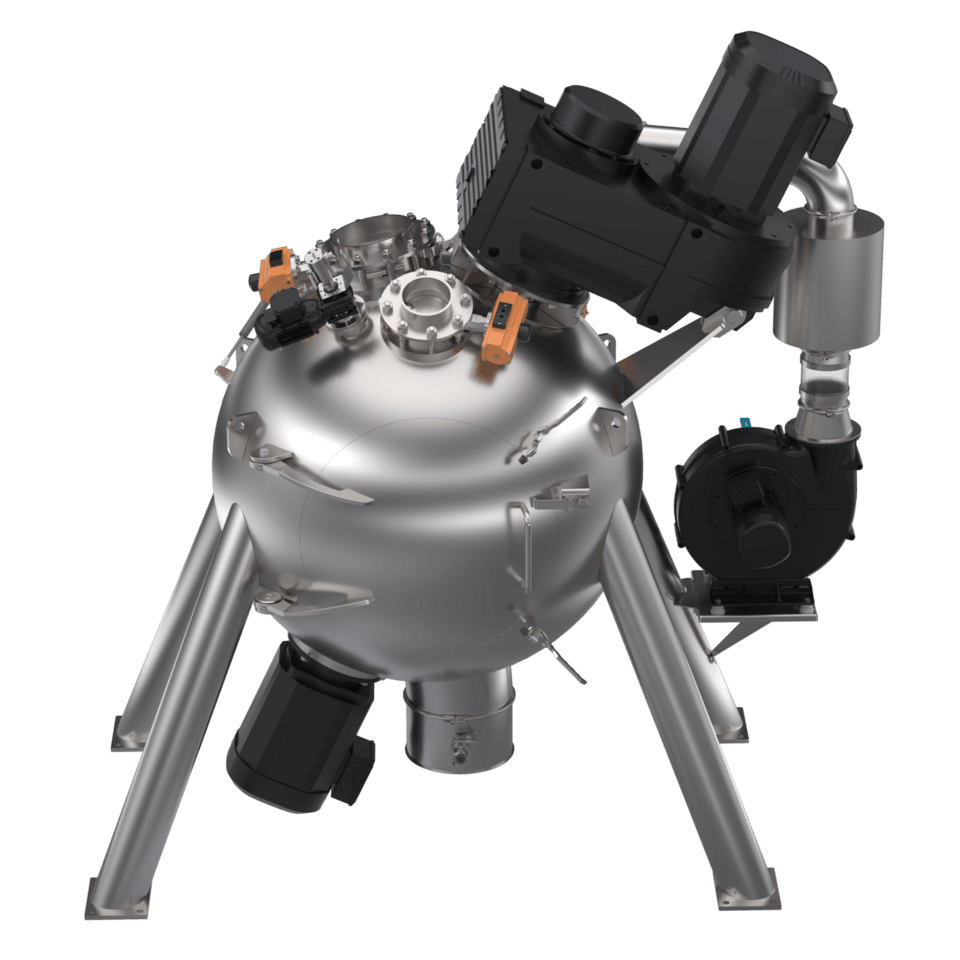
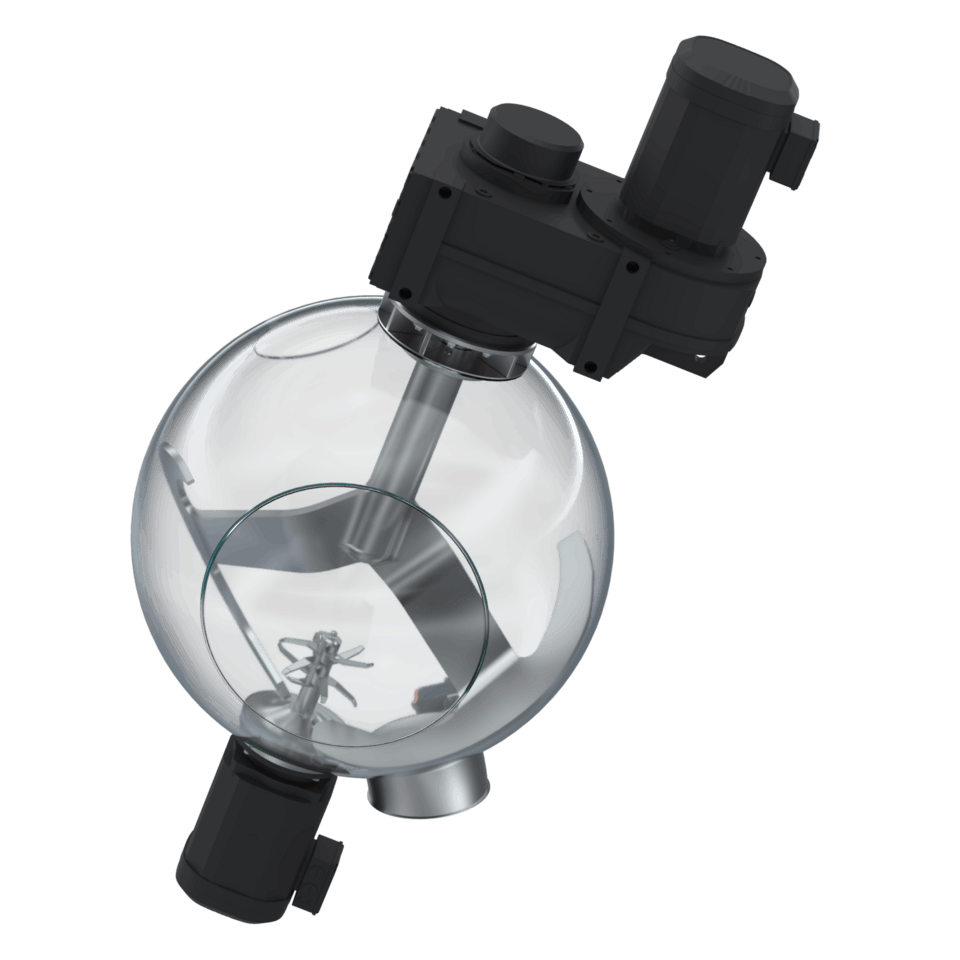
The GloMix Glaxiaris® provides the ideal conditions for the production of high-quality milk powder products, particularly infant formula. Its high-performance mixing technology enables a particularly homogeneous distribution of a wide variety of powder components, regardless of their particle size or bulk density. This means that even the smallest quantities of vitamins, minerals or functional additives can be incorporated into the overall mixture with precision and reproducibility.
At the same time, the mixing process is gentle on the product, ensuring that the structure and function of sensitive ingredients are preserved as effectively as possible. The efficient flow pattern within the mixing system promotes an even distribution of raw materials and minimises the risk of segregation. Short mixing times, high process reliability and a hygienic plant design enable cost-effective production in line with the high quality and safety standards of the baby food industry. The GloMix Glaxiaris® thus represents a high-performance solution for the production of modern infant formula.