CIP Cleaning of Modern Mixing Systems

Automated Wet Cleaning, Drying, and Hygienic Process Reliability - How modern cleaning concepts reduce downtime, facilitate product changeovers, and support consistent hygiene in industrial mixing technology.

In industrial production, the demands for hygiene, process reliability, and cost-effectiveness are constantly increasing. Reliable cleaning of mixing systems plays a crucial role, particularly in the food industry, in the manufacture of dietary supplements, and in pharmaceutical and chemical production.

Frequent formula changes, sensitive ingredients, and strict quality requirements make efficient cleaning concepts indispensable. It is no longer sufficient to simply clean a mixing system thoroughly. The cleaning process must be as fast, reproducible, and traceable as possible.

Modern CIP (Cleaning-in-Place) systems offer promising solutions for this. They enable automated wet cleaning of equipment areas that come into contact with the product without requiring complete disassembly. Combined with appropriate drying and hygienic equipment design, these cleaning concepts can improve both product safety and equipment availability.
CIP Cleaning: What Does “Cleaning in Place” Mean?

CIP cleaning refers to the cleaning of equipment and surfaces that come into contact with the product while they are still installed. Cleaning fluids are introduced into the equipment in a targeted manner via permanently installed lines, spray nozzles, or special cleaning devices.

Unlike traditional manual cleaning, key equipment components do not need to be removed for each cleaning cycle. An automated CIP process can consist of several coordinated steps:

  1. Pre-draining: Removal of as much residual product as possible from the mixing chamber.
  2. Pre-rinsing: Removal of loose residues using water or a suitable rinsing agent.
  3. Main cleaning: Use of appropriate cleaning agents under defined conditions.
  4. Post-rinsing: Removal of dissolved contaminants and residual cleaning chemicals.
  5. Draining and drying: Removal of the liquid and preparation of the system for the next production process.

Depending on the product, type of contamination, and hygiene requirements, additional cleaning steps or disinfection may be necessary.

The main advantage lies in automation: Once cleaning programs have been developed and tested, they can be repeated under comparable conditions. This reduces the impact of manual tasks and allows for better documentation of the process.

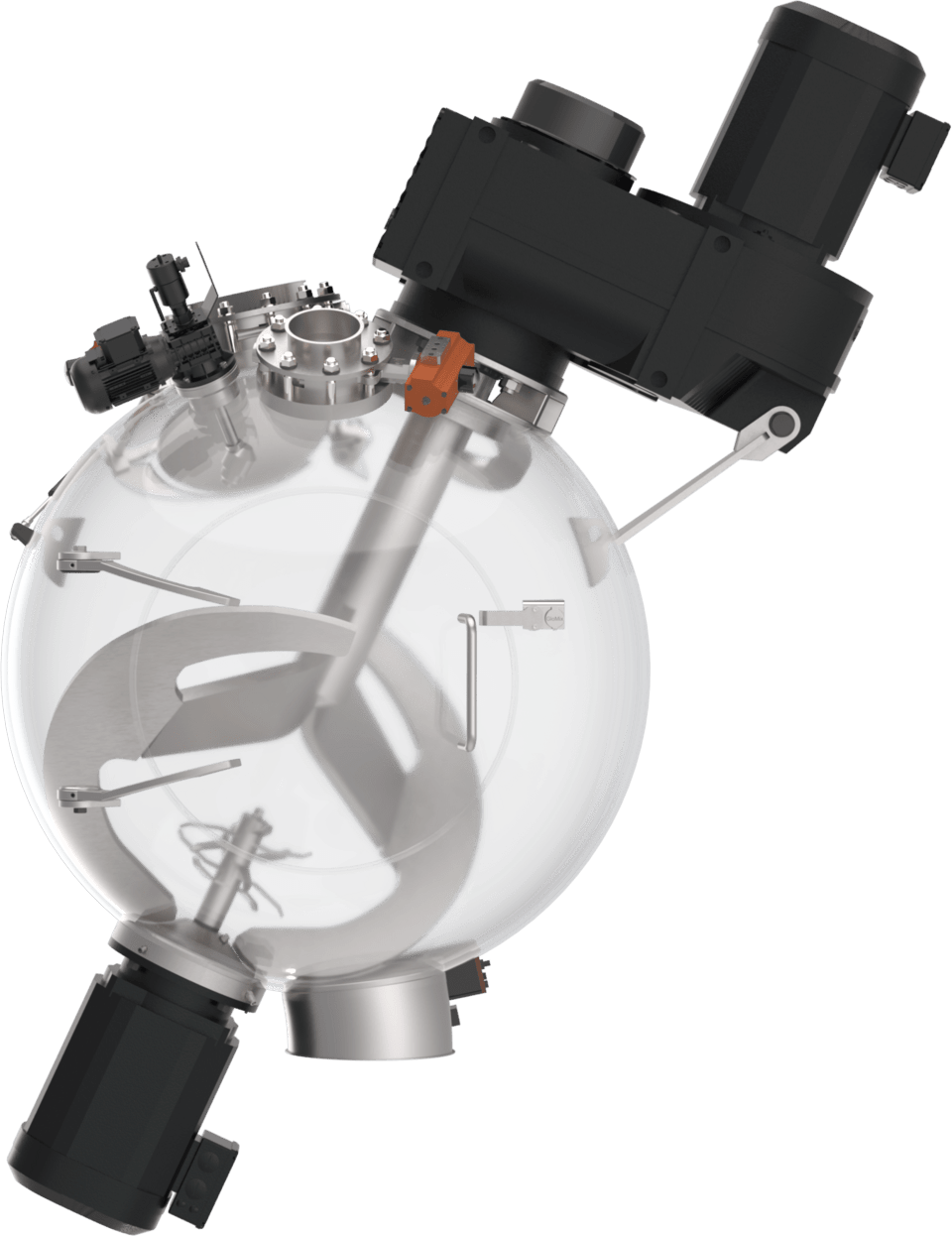
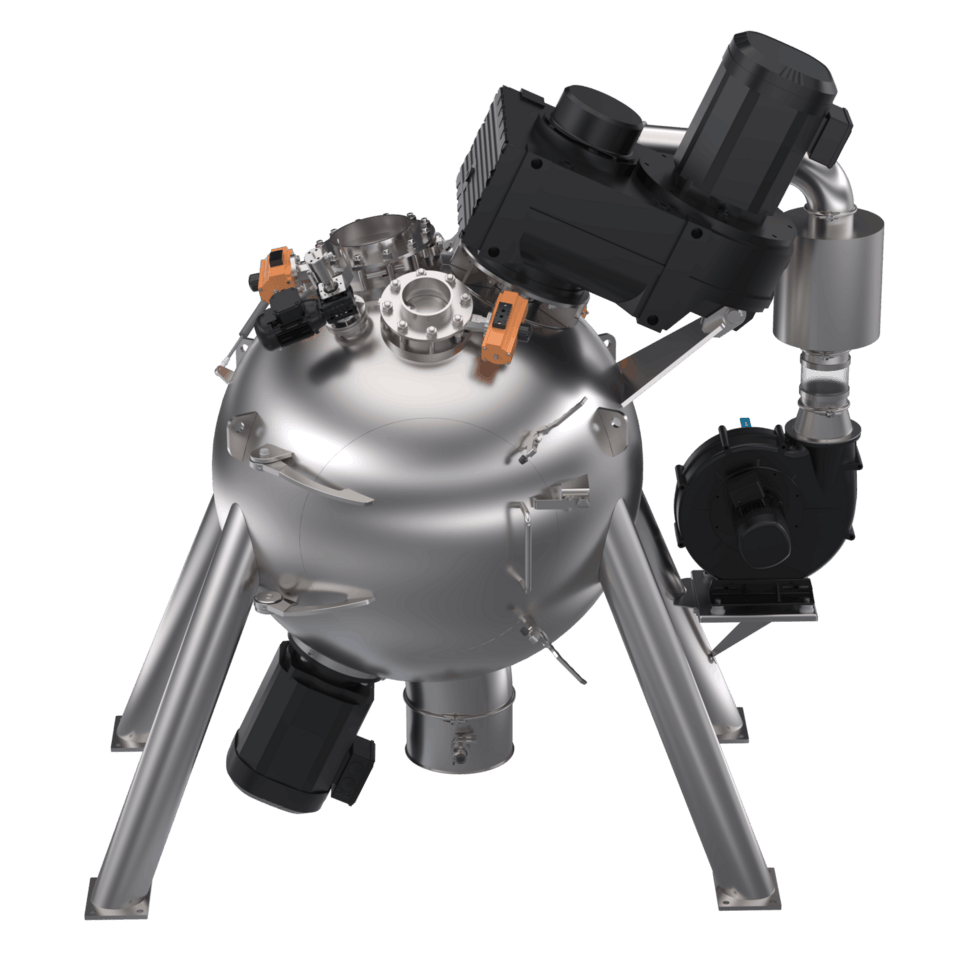
GloMix GLM 1300 mixer with CIP nozzle, block flanges and drying system

Hygienic design as the foundation for effective CIP cleaning

The performance of a CIP system does not depend solely on cleaning agents, temperature, or spray technology. The design of the mixing system itself is a critical factor.

Complex mixing tools, hard-to-reach seals, dead spaces, or poorly positioned discharge openings can make cleaning considerably more difficult. Product residues can remain in such areas even if the actual cleaning cycle was performed properly. Modern mixing systems should therefore feature surfaces that come into contact with the product that are as smooth as possible, easily accessible internal components, and the ability to be emptied almost completely.

The geometry of the mixing chamber also affects cleanability. A design optimized for flow and cleaning can help ensure that cleaning media reliably reach the relevant surfaces and then drain off as completely as possible.

Mixing tools, shaft penetrations, and sealing areas deserve special attention. They must be taken into account when planning the cleaning system and evaluated for their actual cleanability.

A hygienic design is therefore not only a matter of product safety but also a key factor in ensuring short cleaning times and cost-effective production processes.

Automated wet cleaning: Reproducibility instead of manual, one-off procedures

In automated wet cleaning, the individual cleaning steps are coordinated by a system control unit. Temperature, cleaning duration, flow rate, pressure, and, if applicable, the concentration of the cleaning agents can be monitored and documented.

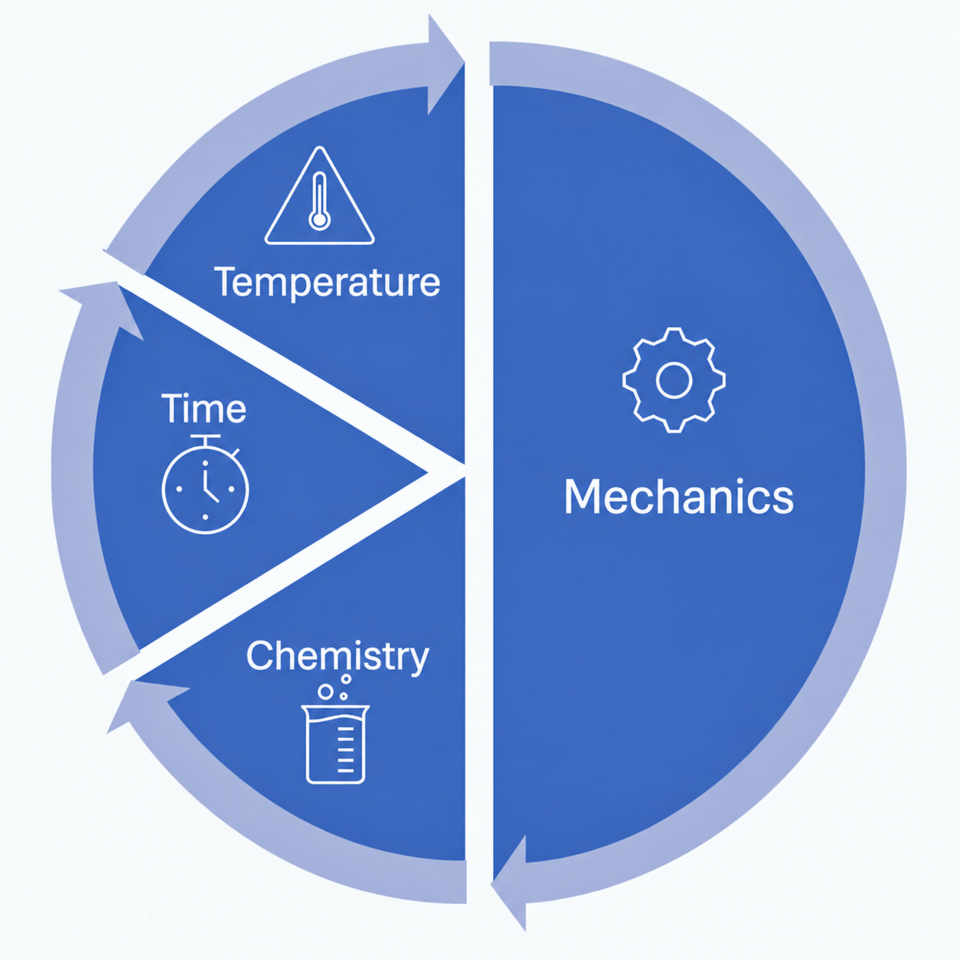
The cleaning effect results from the interaction of four fundamental factors: chemistry, temperature, time, and mechanical action. This principle is known as Sinner’s Circle.

In mixing systems, the mechanical effect is of particular importance. Cleaning nozzles must be arranged and designed in such a way that even complex mixing tools and hard-to-reach surfaces are adequately cleaned. Depending on the system design, it may be advisable to move mixing tools in a controlled manner during cleaning. This allows additional surface areas to be reached. However, the effectiveness of this measure must be demonstrated in each specific application.

Automated process control offers several advantages. Cleaning programs can be adapted to different product groups, while key process parameters are continuously monitored. This creates the conditions for consistent cleaning quality and improved traceability of individual cleaning operations.

Drying After CIP Cleaning: A Critical Process Step

While wet cleaning is often the focus of technical considerations, the subsequent drying process is frequently underestimated. The reliable removal of residual moisture is particularly important in mixing systems for powders, granules, and other dry bulk materials.

Residual water can lead to unwanted adhesion, clumping, or changes in flow properties in the next product batch. Depending on the product and environmental conditions, damp areas can also promote microbiological risks. Complete and reproducible drying is therefore an important component of a comprehensive cleaning concept.

Technically, various methods are available. These include drying with heated air, the use of dehumidified process air, and combined methods with targeted airflow. It is crucial that the drying air reaches even hard-to-access areas and that moisture is reliably removed from the system. To ensure controlled drying, parameters such as temperature, humidity, dew point, and process duration can be monitored.

Automated methods, in which the drying process is evaluated based on appropriate parameters, are particularly interesting. This helps prevent the system from being dried for an unnecessarily long time or being cleared for production too early.

Only the coordinated interaction of wet cleaning, drainage, and drying enables a consistently controlled cleaning process.

Reduce Downtime and Increase System Availability

In many manufacturing facilities, available machine time is a critical factor in profitability.

Every cleaning cycle interrupts the actual production process. Especially when recipes change frequently, cleaning times can add up to significant downtime over the course of a year. Conventional cleaning involves time-consuming steps such as opening the equipment, manual cleaning, any necessary disassembly work, drying, and the final inspection. Automated CIP systems can simplify or optimize the timing of several of these steps.

However, the analysis must not be limited solely to wet cleaning. For actual equipment availability, the entire time span between the end of one production batch and approval for the next batch is decisive. This also includes preparation, emptying, drying, and any necessary inspections.

An economically optimized cleaning concept therefore aims to make the entire cleaning and validation process as efficient as possible without compromising hygienic safety. In addition to time savings, water, cleaning agent, and energy consumption, as well as the required staffing levels, also play an important role.

Efficient CIP cleaning can thus help reduce operating costs and improve the utilization of existing production capacity.

Validation: Providing verifiable evidence of cleaning results

In hygienically sensitive production areas, it is not enough for a mixing system to appear visually clean after cleaning. Rather, it must be ensured that relevant product residues, unwanted contaminants, and, where applicable, cleaning agent residues have been sufficiently removed.

This is where the validatability of the cleaning process becomes particularly important.

Cleaning validation refers to the documented proof that a specified cleaning procedure consistently meets the prescribed requirements under defined conditions. An automated CIP system provides an important foundation for this, as key process parameters can be recorded and documented. These include, for example, cleaning duration, temperature, flow rate, pressure, and, where applicable, conductivity or cleaning agent concentration. However, this process data alone does not prove the actual cleanliness of all surfaces that come into contact with the product.

Depending on the application, additional tests may be required. These may include visual inspections, swab samples, rinse samples, chemical residue analyses, or microbiological tests.

Areas of the facility that are difficult to access and products with a high tendency to adhere are particularly critical. These must be taken into account when determining appropriate test conditions. A traceable cleaning validation thus not only provides additional assurance but also supports compliance with industry-specific quality and hygiene requirements.

Resource Efficiency and Sustainability of Modern Cleaning Systems

In addition to hygiene and cost-effectiveness, resource efficiency is becoming increasingly important.

Conventional cleaning processes can consume significant amounts of water, cleaning chemicals, and energy. The subsequent drying process also requires additional energy.

Modern CIP concepts offer ways to specifically optimize this consumption. Demand-based dosing of cleaning agents, optimized rinsing programs, and appropriate monitoring of the cleaning process can help prevent unnecessary consumption of cleaning media.

There is also room for optimization in the drying process. Energy consumption can potentially be reduced through proper airflow management and by adjusting the process duration to the actual drying status. It is essential to ensure that measures to conserve resources do not compromise cleaning quality.

The combination of hygienic design, intelligent control, and optimized use of media is therefore becoming a key area of development in modern industrial mixing technology.

Automated wet cleaning: Reproducibility instead of manual, one-off procedures

In automated wet cleaning, the individual cleaning steps are coordinated by a system control unit. Temperature, cleaning duration, flow rate, pressure, and, if applicable, the concentration of the cleaning agents can be monitored and documented.

The cleaning effectiveness is based on the interaction of four key factors, which are summarized in what is known as Sinner’s Circle

Four factors determine cleaning performance

Four factors determine cleaning performance

Mechanics: During CIP cleaning, the mechanical effect results primarily from the targeted application of cleaning fluid to surfaces that come into contact with the product. Pressure, flow rate, flow conditions, and the selection of appropriate cleaning nozzles influence how effectively contaminants are removed.

Temperature: An appropriate cleaning temperature can help loosen product deposits and enhance the effectiveness of suitable cleaning agents. In doing so, the thermal resistance of the system components and the properties of the residues must be taken into account.

Time: The duration of the cleaning process determines how long the mechanical and chemical actions can act on the contaminants. The goal is a cleaning duration that is sufficiently long yet economically optimized.

Chemicals: Cleaning agents help loosen and remove product residues. Their selection and concentration must be tailored to the specific type of contamination, the materials involved, and the hygiene requirements.

Significance for Modern Blending Plants

The four influencing factors interact directly with one another. For example, if the mechanical cleaning effect is improved through optimized spray technology, the required cleaning time can be reduced under suitable conditions.

The mechanical effect is particularly important in industrial mixing systems with complex mixing tools, seals, and hard-to-reach surfaces. Simply extending the duration of the cleaning program cannot reliably compensate for insufficient access to individual areas of the system.

The decisive prerequisite for efficient CIP cleaning is therefore the coordinated interaction of hygienic plant design, suitable cleaning technology, and controlled process parameters. Thus, Sinner’s Circle forms an important foundation for the development of reproducible, resource-efficient cleaning programs.

Future Prospects: Smart and Connected Cleaning Systems

The development of modern CIP systems is increasingly moving toward automated, sensor-monitored, and data-driven processes.

While traditional cleaning programs often operate at fixed time intervals, future systems will be able to respond more effectively to the actual process conditions.

Possible examples include cleaning programs that use appropriate measurement values to determine when a rinsing cycle is complete or when the required level of dryness has been achieved. Integration into higher-level production and quality management systems is also becoming increasingly important. By digitally recording cleaning data, processes can be compared, deviations detected, and opportunities for optimization identified.

In the long term, such technologies can help transform cleaning from a predominantly time-controlled process into a more condition-based component of automated production.

Conclusion: Hygienic cleaning starts with the design

CIP cleaning of modern mixing systems is far more than just an automated rinsing process.

Only through the combination of hygienic system design, effective wet cleaning, controlled drying, and traceable process monitoring can a cleaning concept be created that meets the requirements of modern production facilities.

Particularly in cases of frequent product changes, a well-coordinated cleaning technology offers significant potential for higher equipment availability, reduced manual effort, and improved process reliability.

The cleanability of the mixing system itself remains a decisive factor for success. After all, the better a system is designed for cleaning and drainage, the easier it is to implement efficient and reproducible cleaning processes.

GloMix Glaxiaris industrial mixer – transparent with 2 drives

GloMix: Innovative mixing technology with a focus on cleaning and hygiene

One example of the combination of innovative mixing technology and a design optimized for cleaning is the GloMix Glaxiaris® ball mixer.

Its spherical mixing chamber, smooth surfaces, and design optimized for efficient discharge facilitate easy cleaning and quick product changeovers.

In addition to manual dry cleaning, an optional automated wet cleaning system is also available. In this way, GloMix not only meets the requirements for efficient and gentle mixing but also addresses the importance of hygiene, cleaning effort, and equipment availability in everyday industrial production.

Kontakt