
The demands placed on industrial mixing processes are constantly increasing. Product protection, process reliability, quality preservation and reproducibility play a crucial role, particularly when processing raw materials that are sensitive to oxidation. In the food industry, the manufacture of food supplements (nutra/nutraceuticals) and in the production of speciality chemical and functional products, even contact with atmospheric oxygen can trigger undesirable changes.
Oxidation reactions can impair the sensory, chemical and functional properties of a product. Possible consequences include changes in colour, loss of flavour, fat rancidity, degradation of active ingredients and a reduced shelf life. This is particularly critical in the case of high-quality powder blends, vitamin-containing formulations, plant extracts, unsaturated fatty acids and oxygen-sensitive special formulations.
One well-established method of reducing these risks is mixing under nitrogen (N₂) or in a controlled inert gas atmosphere. This involves deliberately reducing the oxygen content within the mixing system in order to minimise oxidative reactions during processing.
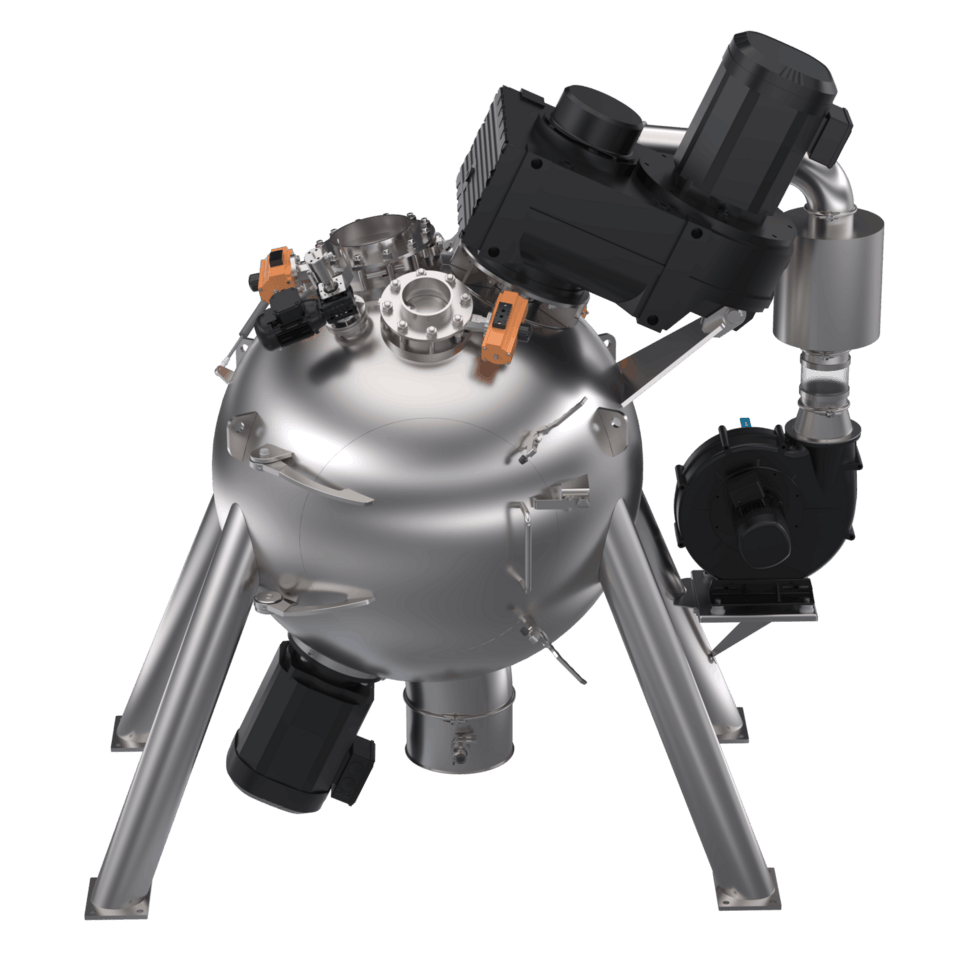
However, it is not the nitrogen supply alone that is crucial. Only the combination of enclosed plant design, controlled gas flow, suitable sealing, reliable dosing and reproducible mixing technology enables effective protection against oxidation.